
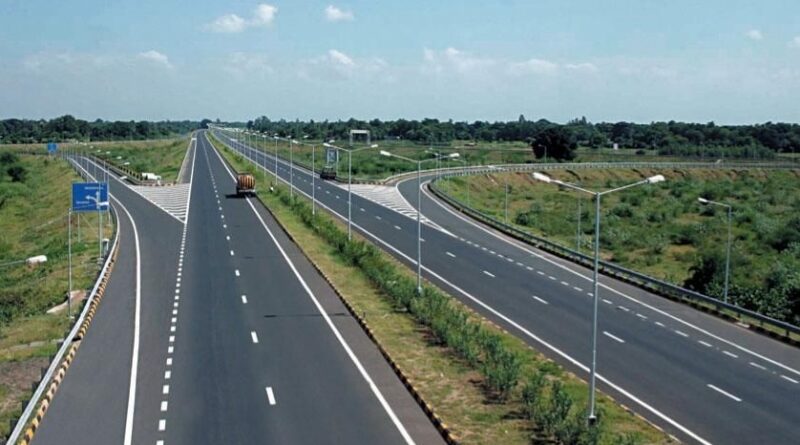
Bhaniyawala–Jollygrant–Rishikesh Four/Six Laning Project

A Highway Designed for the Future, Built with Wildlife Conservation at its Core*
*Project, spanning approximately 20 kilometers, is being constructed under the Hybrid Annuity Mode at an estimated cost of ₹743 crore.*
*The Right of Way (ROW) designated for this project has been reduced from 60 meters to just 23 meters.*
*Based on scientific assessment, 754 trees were identified as suitable for transplantation.*
*The project incorporates several features, including a major bridge-cum-elephant underpass, four dedicated elephant underpasses, green guide hedges, sound barriers, and anti-glare screens.*
Dehradun. The National Highways Authority of India (NHAI) is taking forward the Bhaniyawala–Jollygrant–Rishikesh Four/Six Laning Project (NH-07) with the objective of creating a safer, faster and environmentally responsible highway for Uttarakhand. The approximately 20-km project, being developed at an estimated cost of ₹743 crore under the Hybrid Annuity Mode (HAM), will strengthen connectivity between Dehradun, Jolly Grant Airport and Rishikesh, while supporting tourism, Char Dham Yatra and the state’s growing transportation needs.
Why the Project is Needed
The forest stretch of the existing two-lane road is already carrying around 18,456 vehicles every day, equivalent to nearly 15,088 Passenger Car Units (PCUs). With traffic expected to grow further because of increasing tourism, airport connectivity and Char Dham movement, widening of this stretch has become essential.
The existing two lane highway is characterised by sharp curves, forest stretches and frequent movement of buses, trucks and other heavy commercial vehicles. These conditions are contributing to congestion and accidents. The four-laning will improve road geometry, enhance riding quality and provide safer movement with advance safety features for both local commuters and tourists.
*Protecting Forests*
NHAI is adapting several engineering modifications to minimise environmental impact. Instead of using the conventional 60-metre Right of Way (ROW), the forest stretch has been designed with minimal 23-metre ROW significantly reducing trees felling while maintaining highway safety standards.
To further minimise ecological impact, the Forest Research Institute (FRI) conducted a scientific assessment and 754 trees have been identified as suitable for transplantation, which shall be carried out in this monsoon.
*Wildlife Conservation at the Core of the Project*
Since the project passes through the ecologically sensitive Badkot, Rishikesh and Thano forest ranges, NHAI has adopted the same conservation-oriented approach used in the Delhi–Dehradun Economic Corridor.
Based on recommendations of the Uttarakhand Forest Department, WWF-India and the Wildlife Institute of India (WII), Dehradun the project includes:
• 01 Major Bridge-cum-Elephant Underpass
• 04 dedicated Elephant Underpasses
• Green guide hedges
• Sound barriers
• Anti-glare screens
• Wildlife warning signages
• Speed calming measures
• Designated “No Horn” zones
These measures have been incorporated to maintain wildlife connectivity while reducing the risk of human animal conflict.
*Why Wildlife Mitigation is Essential*
Forest Department records indicate that on the existing two lane road total of 29 wild animals were killed in last 5 years in road accidents across the Rishikesh and Badkot forest ranges. The proposed highway with 3.5 km elevated structure for elephant underpasses will ensure safe movement of animals and reduce wildlife mortality along this busy corridor.
Project Progress with Legal and Statutory Compliance
The project has commenced after obtaining the required statutory approvals. The Hon’ble High Court of Uttarakhand, while hearing WP(PIL) No. 37 of 2025, subsequently clarified that there was no continuing stay on tree felling. State government has granted the required Working Permission for tree felling and transplantation, subject to prescribed environmental safeguards and statutory conditions. Accordingly, NHAI is carrying out the project only after obtaining the necessary permissions from the competent authorities and in full compliance with all applicable legal and environmental requirements.
*Benefits for Uttarakhand Once completed, the project will*
• Improve connectivity between Dehradun, Jolly Grant Airport and Rishikesh.
• Support seamless travel for Char Dham pilgrims, tourists and local commuters.
• Reduce travel time and traffic congestion.
• Improve road safety through better geometry and wider carriageways.
• Accommodate future traffic generated by upcoming highway projects.
• Facilitate safer movement of wildlife through dedicated elephant underpasses.
• Balance infrastructure development with environmental conservation through scientific planning and tree transplantation.
*A Highway for Tomorrow*
The Bhaniyawala–Jollygrant–Rishikesh Four/Six Laning Project represents NHAI’s commitment to developing future-ready highway infrastructure that addresses increasing traffic demand while safeguarding Uttarakhand’s forests and wildlife. By combining engineering innovation, environmental sensitivity and statutory compliance, the project demonstrates that sustainable infrastructure development and ecological conservation can progress hand in hand.